The Cloake Board Method: How We Raise Queen Cells at Frosty Meadow
If you read our Caucasian queens post, you saw a brief mention of the Cloake Board cell builder — and a promise that the topic deserved a post of its own. This is that post. We’re writing it in the middle of a real cycle, in fact — the one that started with a swarm we did not plan for, continued with disappointing cell acceptance, and is now in the middle of a recovery that has us combining colonies and rethinking our donor strategy. So this is both a methodology post and a journal entry from a cycle that did not go to plan. Beekeeping is mostly like that.
Why a cell builder at all
Raising a few queens by walking-away splits or simple Miller-method strips is fine for two or three queens here and there. But once you want a dozen well-fed queen cells from a known mother queen, all on a predictable schedule, you need a different tool. A cell builder is a colony you have deliberately reorganized so that thousands of well-fed nurse bees, with no queen they can reach, will lavish royal jelly on the larvae you give them.
Done right, a cell builder produces queens that are large, well-fattened, and emerge with the body reserves they need to mate well and lay strongly. Done sloppily, you get under-fed queens who limp out of their cells and never amount to much. The method we use is the Cloake Board method, named after New Zealand beekeeper Harry Cloake who developed the equipment in the 1970s. The specific configuration and protocol we follow, though, comes from Paul Kelly, longtime apiarist at the University of Guelph Honey Bee Research Centre. Paul has spent decades teaching, refining, and publicly sharing the four-excluder stack, the frame curation in the upper deep, the entrance and congestion strategy — the whole choreography that turns a Cloake board from a piece of equipment into a reliable queen-rearing machine. Honestly, this post should probably just be called “The Paul Kelly Method as We Run It at Frosty Meadow,” because that’s closer to the truth. He’s a hero of ours.
The basic idea: two impulses, in sequence
Bees draw queen cells under three different impulses: swarm impulse (a healthy colony preparing to reproduce by dividing), supersedure impulse (a colony quietly replacing a failing queen), and emergency impulse (a colony suddenly finding itself without a queen and scrambling to make a new one). The cells produced under each of these impulses are not equal. Swarm cells are generally the largest and best-fed, because the colony is calmly preparing for reproduction at full strength. Emergency cells are smaller and less well-fed, because the bees are reacting under stress and often pick larvae that are already too old.
The clever thing about the Cloake Board method is that it lets you stack both impulses on top of each other in the same colony, in sequence. The first 48 hours of cell drawing happens under the urgency of both swarm and emergency impulse — you get fast acceptance and immediate, vigorous feeding. Then you switch the colony into a state where only swarm impulse is operating — and the bees finish the cells calmly, with no further stress, producing the well-fed queens you want.
The mechanism that makes this two-stage trick possible is a small piece of equipment called a Cloake Board.
What a Cloake Board is
A Cloake Board is a flat wooden board roughly the same outside dimensions as a hive body, with a queen excluder built into it and a metal slide that can be pushed through a slot to seal the upper box from the lower box. Slide closed, it's a solid divider; slide open, it's just a queen excluder. There's also typically a small entrance at the back, opposite the colony's normal front entrance.
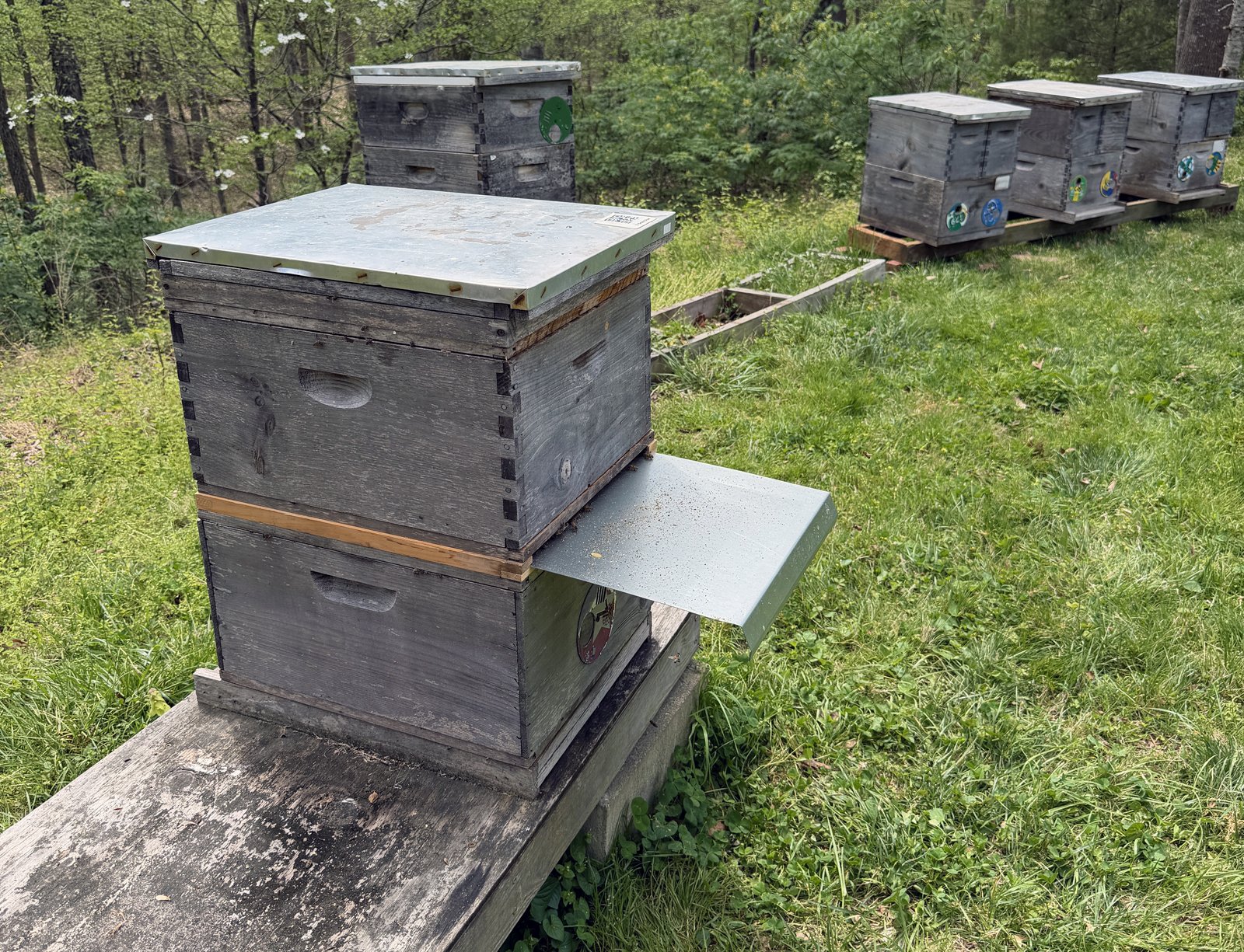
That single piece of equipment lets you do something that would otherwise require physically moving boxes: you can flip a colony from "queenless above the divider" to "queenright above the divider, just behind a queen excluder" in about ten seconds, without disturbing the bees on either side.
How we configure the stack
At Frosty Meadow, our cell builder is a single colony built up by combining two strong colonies before each major cycle — either at the start of the season, or, sometimes, mid-season when we’re recovering from a setback (more on that in a moment). Once combined and settled, we configure it in a deliberate stack from bottom to top:
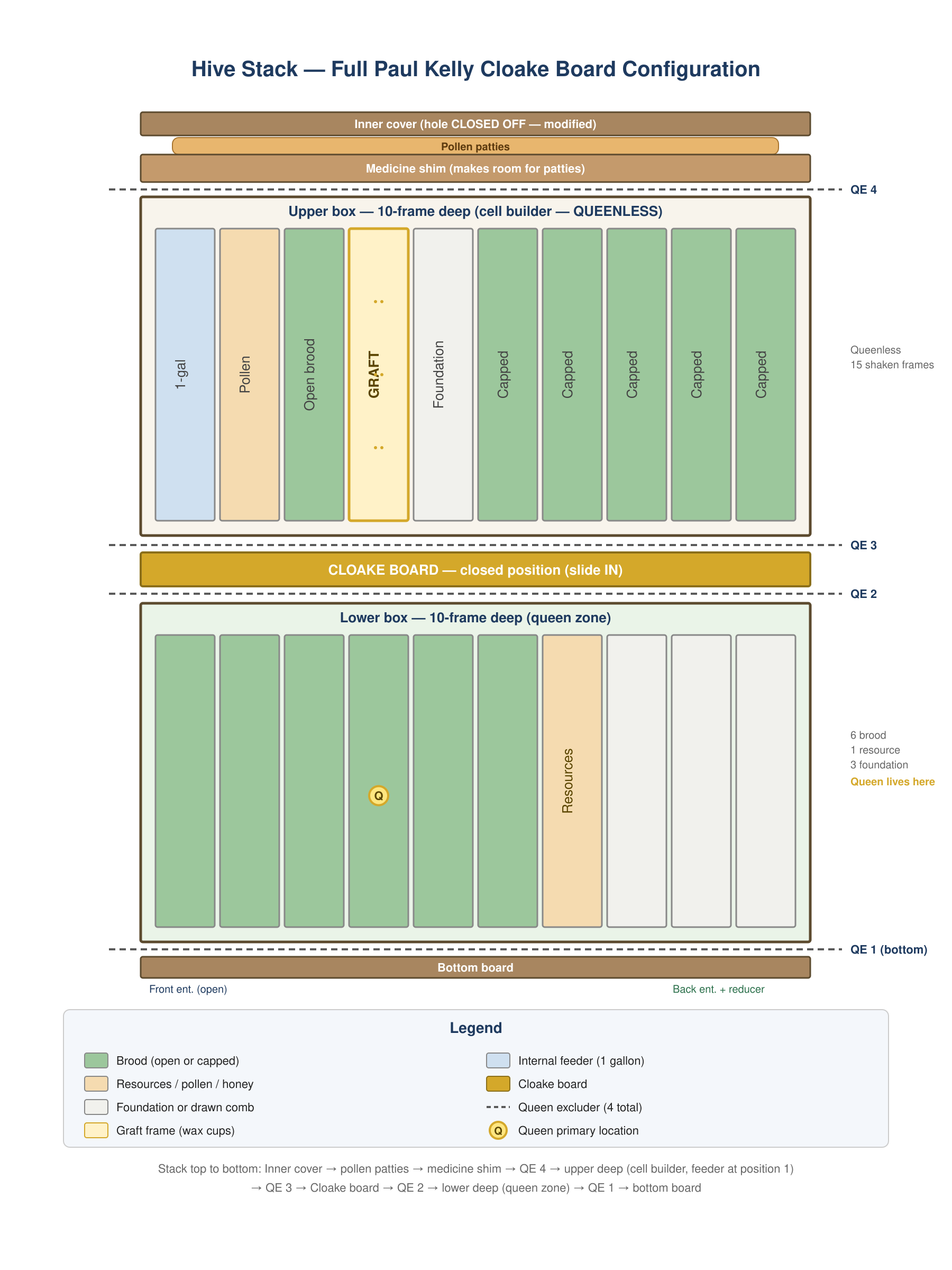
- Lower deep: the queen, six frames of brood, one frame of resources, and three frames of foundation or drawn comb. The queen lives down here for the duration. She has plenty of room to lay and is undisturbed.
- Queen excluder.
- Cloake Board with slide closed. When the slide is in, this is a solid floor for the upper box.
- Upper deep: packed with fifteen frames' worth of bees we shake up from below, plus a curated set of frames designed to support cell building. From outside-in: capped brood frames with emerging young bees on the outside, a frame of foundation, the empty graft frame in the middle, a frame of open brood right next to the graft frame to attract nurse bees, a frame of pollen, and a one-gallon internal feeder full of light syrup.
- Queen excluder on top.
- Inner cover and outer cover.
The two queen excluders — one above and one below the Cloake Board area — matter. They guarantee the queen never accidentally finds her way into the upper box no matter what is happening with the slide.
Entrance configuration matters
The Cloake Board has a small entrance at the back of the upper box. We use it. Our cell builder has an entrance at the front (for the lower box, where the queen lives) and a separate, smaller entrance at the back through the Cloake Board (for the upper box). We tape shut any other entrance holes on the woodenware so foragers are forced to use just these two openings.
This isn't decorative. Forcing all the upper-box bees to enter and exit through a single, restricted back entrance creates a sense of crowding and congestion inside the upper box that strongly reinforces the bees' instinct to raise excellent queens. A well-fed, slightly congested colony in late spring is a colony that is already thinking about swarming — which is exactly the mood we want.
The day before grafting: prep day
The day before we plan to graft, we set the colony up. The Cloake Board slide goes in. The queen is located and confirmed below in the lower deep. Fifteen frames' worth of bees are shaken up into the upper box. The upper box gets its full frame configuration. The empty graft frame — a frame fitted with bars of empty wax cups — goes into the central position so the bees can polish the cups overnight. The feeder is filled. The whole stack is closed up.
By the next morning, the upper box is queenless, packed with bees, well-fed, slightly crowded, and the wax cups are polished and ready. The bees up there cannot smell the queen through the closed Cloake Board, so as far as their instincts are concerned, they are queenless.
Grafting day
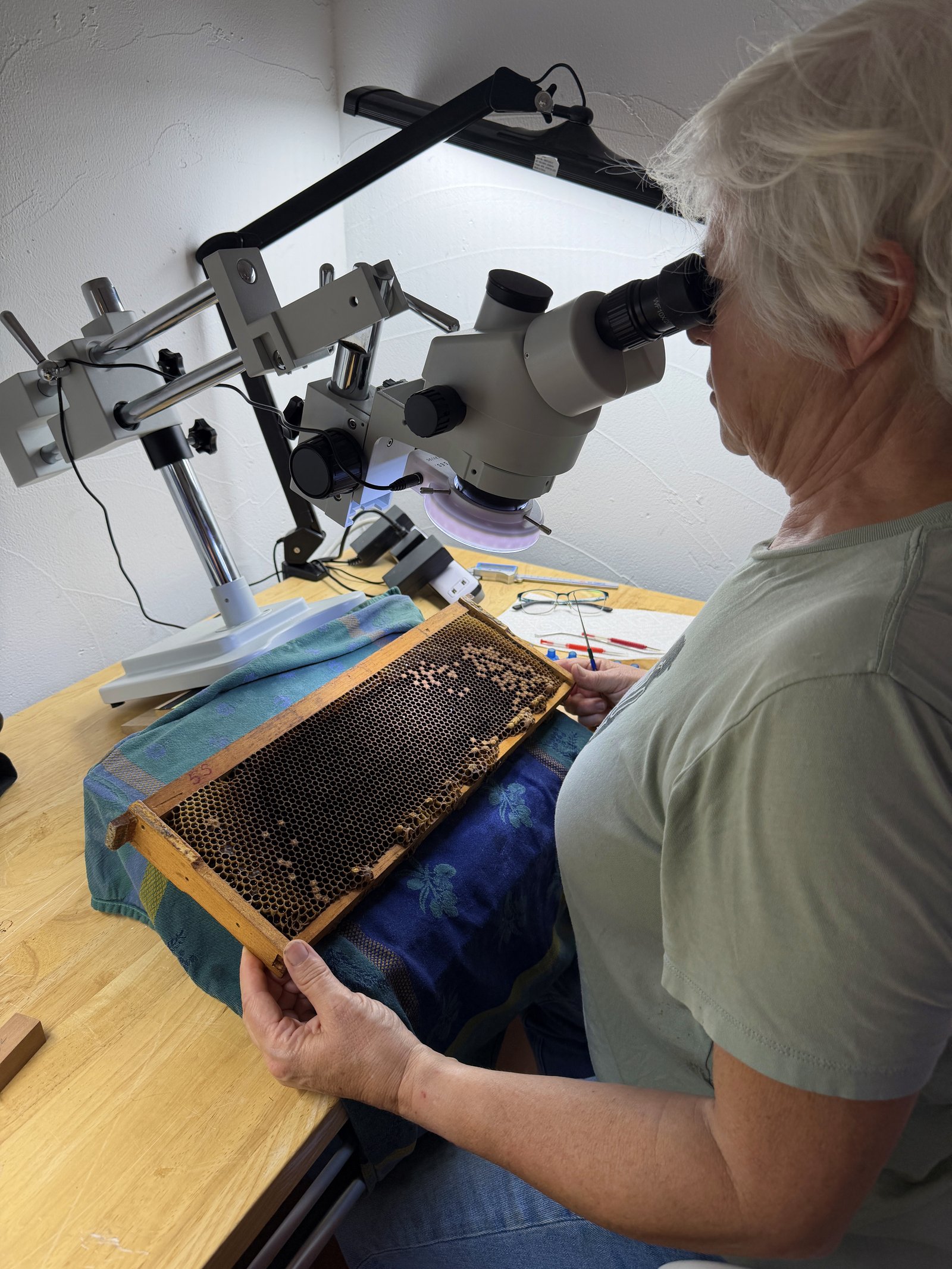
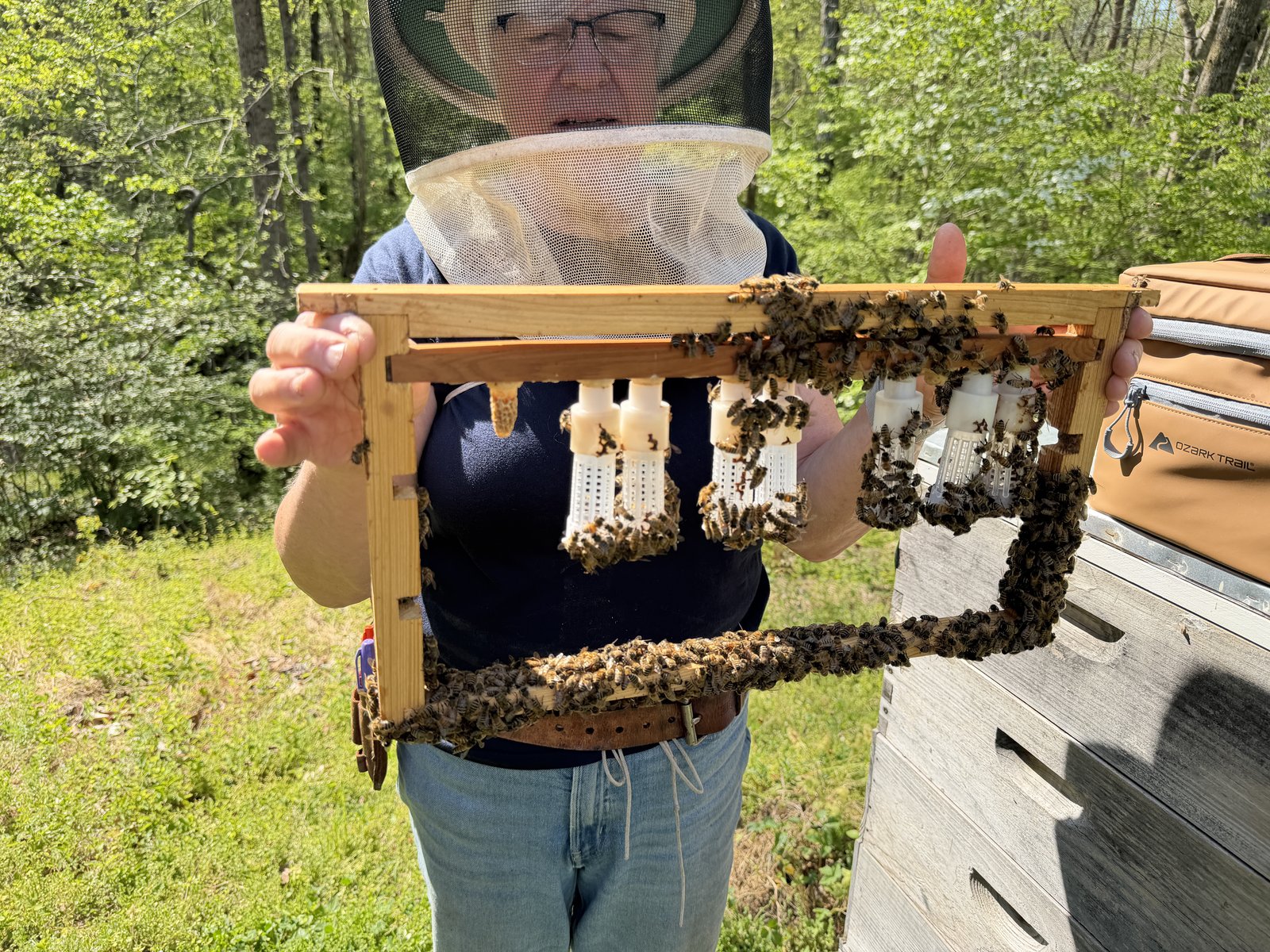
On grafting day — almost always a Wednesday for us, because it sets up a clean weekly rhythm we can plan around — we open the upper box and remove the polished graft frame. We graft young larvae (under twenty-four hours old) from our chosen mother queen into the polished wax cups. We use a Chinese grafting tool, which lets us slip a tiny amount of jelly underneath the larva and lift the larva onto the cup floor in a single motion.
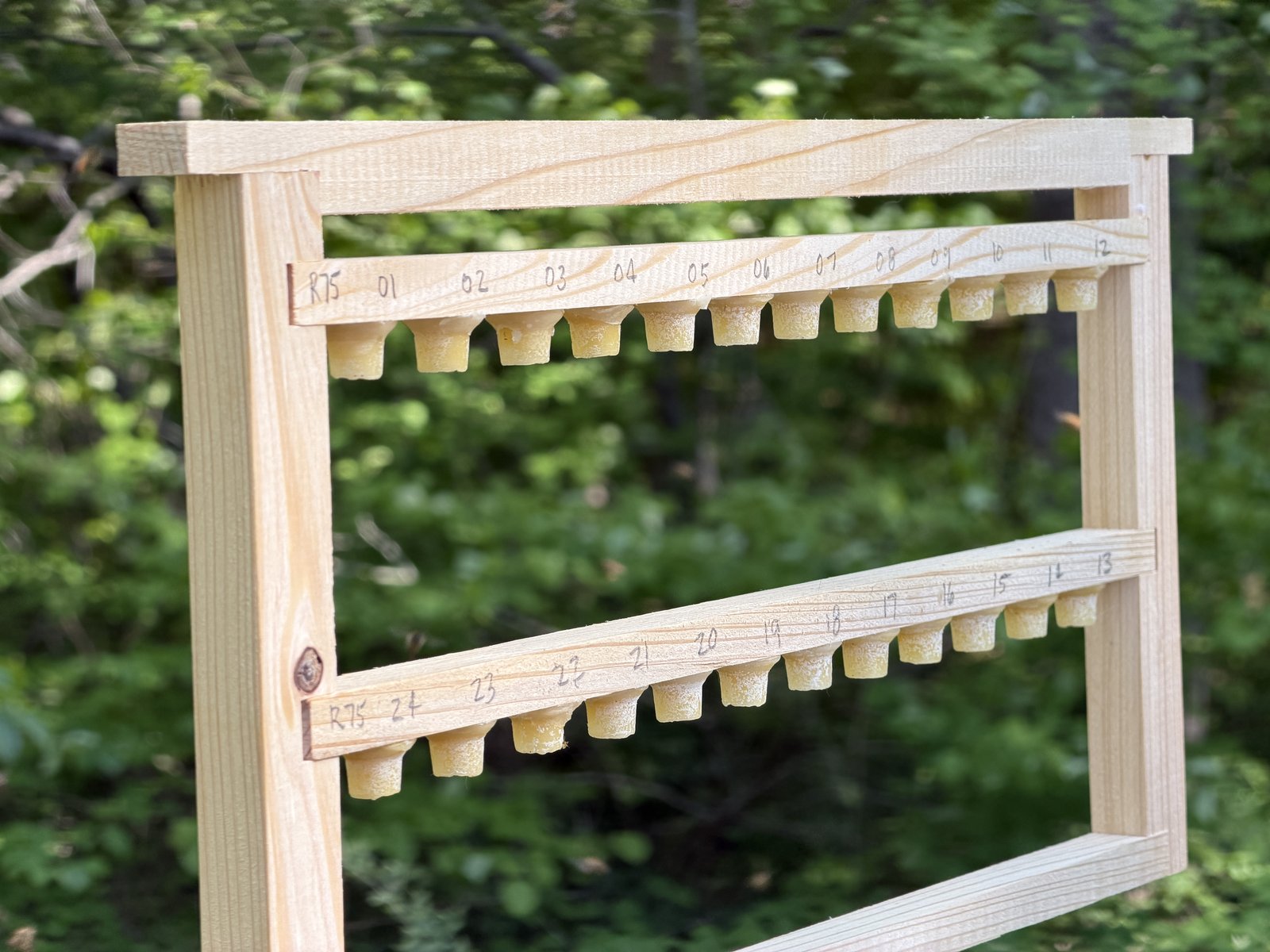
Within an hour of taking the frame out of the cell builder, the grafted frame goes back into its central position. The upper box closes up and the bees go to work. Because the Cloake Board slide is still in, the upper box is still functionally queenless, and the bees draw the cells under both swarm impulse (because of the crowded congestion they were set up to feel) and emergency impulse (because there is no queen they can reach). Acceptance is fast and vigorous.
Two days later: pull the slide
Forty-eight hours after grafting, we pull the Cloake Board slide out to the halfway position. The colony immediately begins to normalize. Pheromones start passing between the upper and lower boxes. The bees in the upper box can sense the queen below them through the queen excluder, and they realize they are not, in fact, queenless — just separated from the queen by an excluder. Emergency impulse fades.
What does not fade is swarm impulse. The colony is still crowded, still full of bees, still set up by every other configuration choice we made to feel like a colony preparing to reproduce. So the bees keep raising the cells that have already been started — but now they finish them calmly, without stress, with steady heavy feeding. This is the regime that produces the largest, best-fed cells.
We do not open the upper box on slide-pulling day. The cells at this stage are delicate. The slide pulls out the side of the hive, and that's the only intervention.
The wild cell discipline — why this is the most important step
⚠️ This is the step that, if skipped, ruins everything.
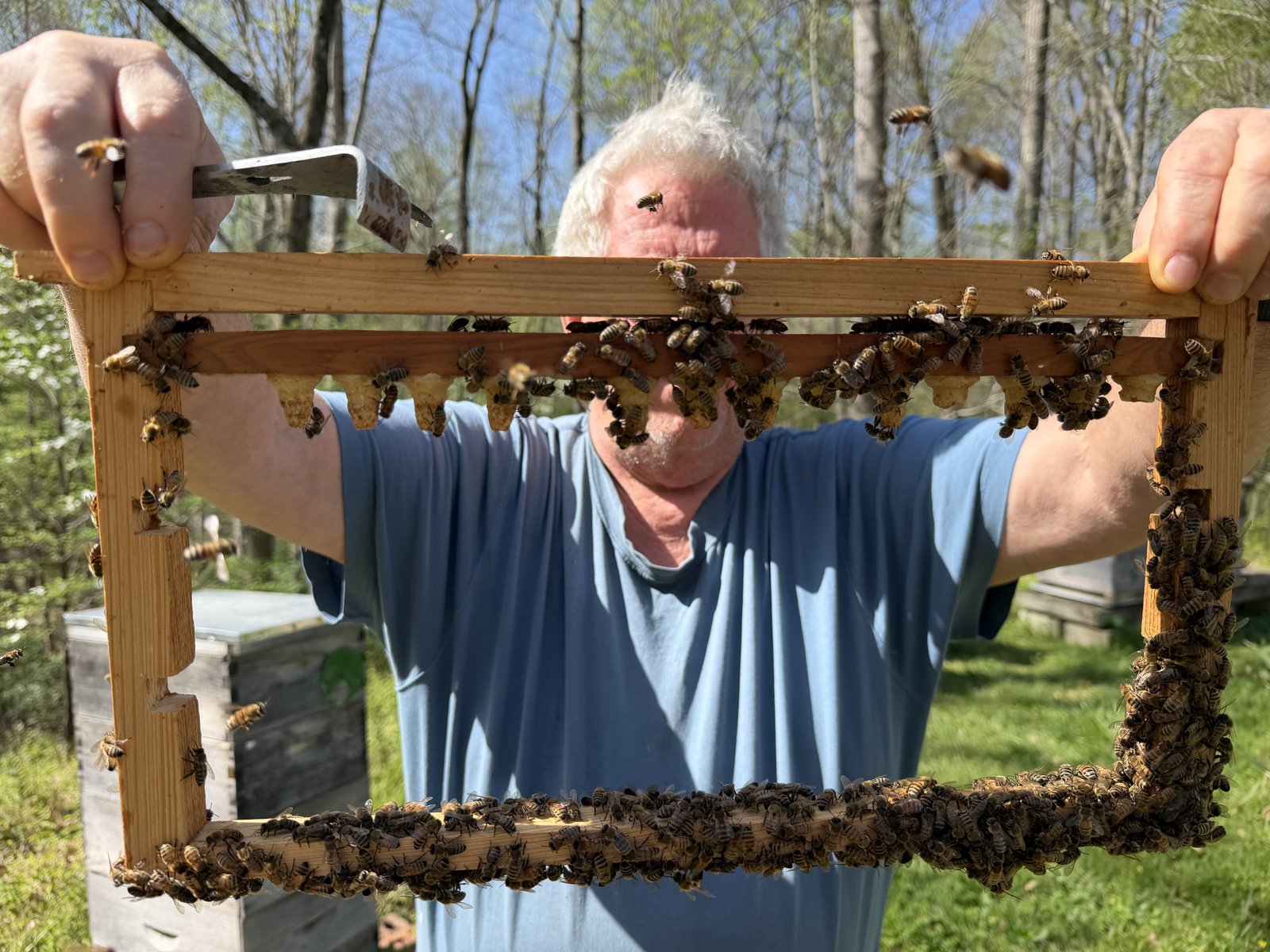
Every week, before any frame goes back into the cell builder, every single frame must be shaken completely free of bees and inspected for wild queen cups and cells. This is true for brood frames, food frames, pollen frames — every frame, every time, no exceptions.
We have found nine capped wild cells on a single frame during a routine weekly check. If even one of those wild cells is missed and the virgin queen inside emerges, she will go through the upper box and destroy every grafted cell we have so carefully set up. An entire batch can be lost in a single afternoon to one missed cup.
Our protocol is two-person. Person one shakes every bee off the frame and does a thorough sweep, destroying every cup and cell — even empty ones, because a polished empty cup today is a capped cell next week. Person two does an independent double-check of every frame the first person cleared. We tip each frame to look up into the cells from below, because cups are dramatically easier to spot from underneath than from the side. We sort the inspected frames into two piles as we go — brood frames in one pile, food and pollen in another — so reassembly is fast and orderly.
We do this every single week the cell builder is running. There is no shortcut and no way to skip ahead. The reason this method works is because the rest of the system is a coiled spring of swarm impulse held in place by everything we have set up — and a missed wild cell is the thing that releases it disastrously.
Distributing the cells
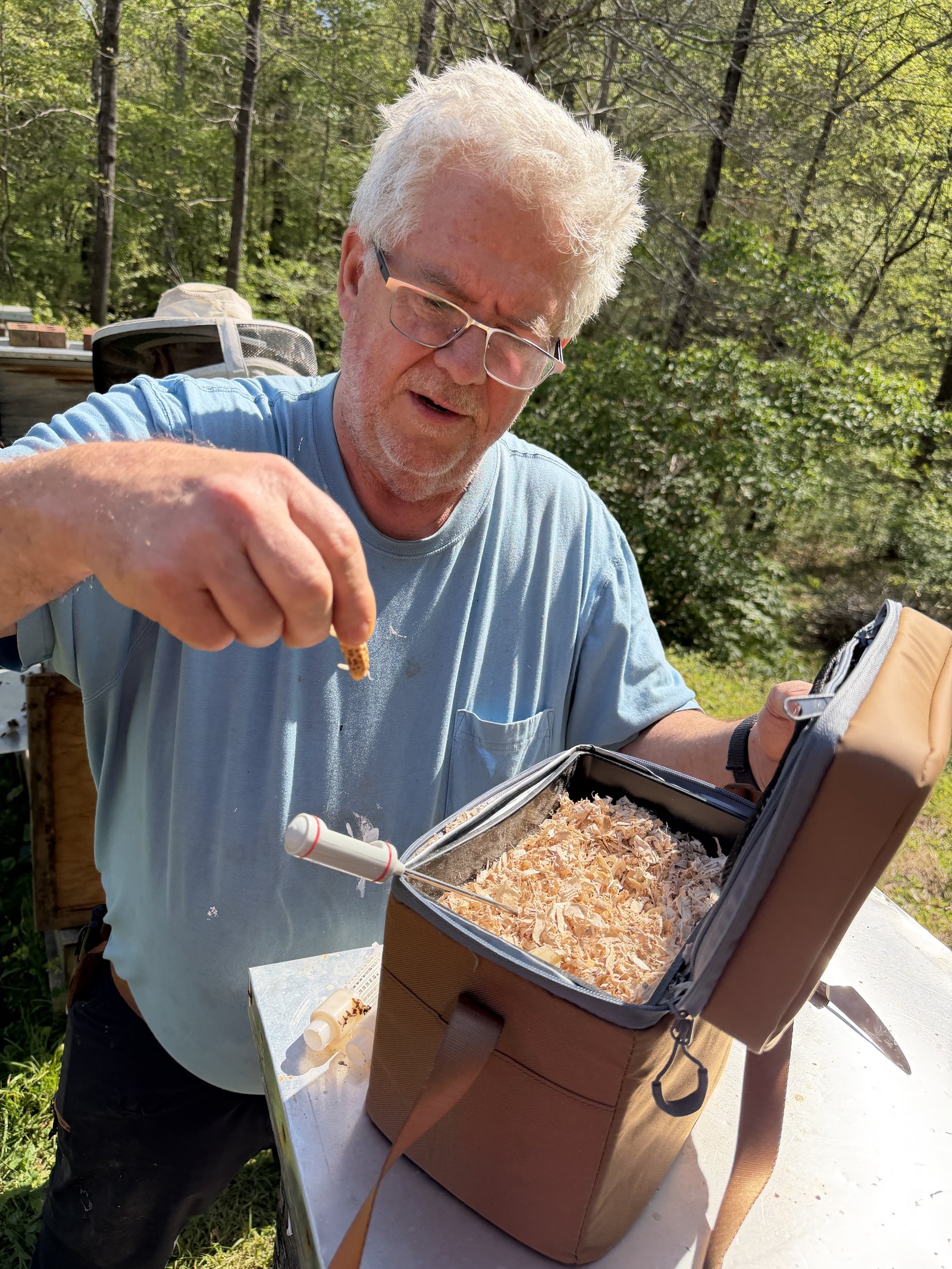
Ten days after the graft, the cells are capped, fully developed, and ready to be moved out of the cell builder before the queens emerge. We open the upper box, lift out the graft frame, and gently transfer each capped cell into a prepared mating nuc using a queen cell protector. Each mating nuc is a small four-frame resource hive body containing two deep frames of bees and brood, a frame with nectar and pollen, and an internal feeder. Built in advance, ready to receive the cell.
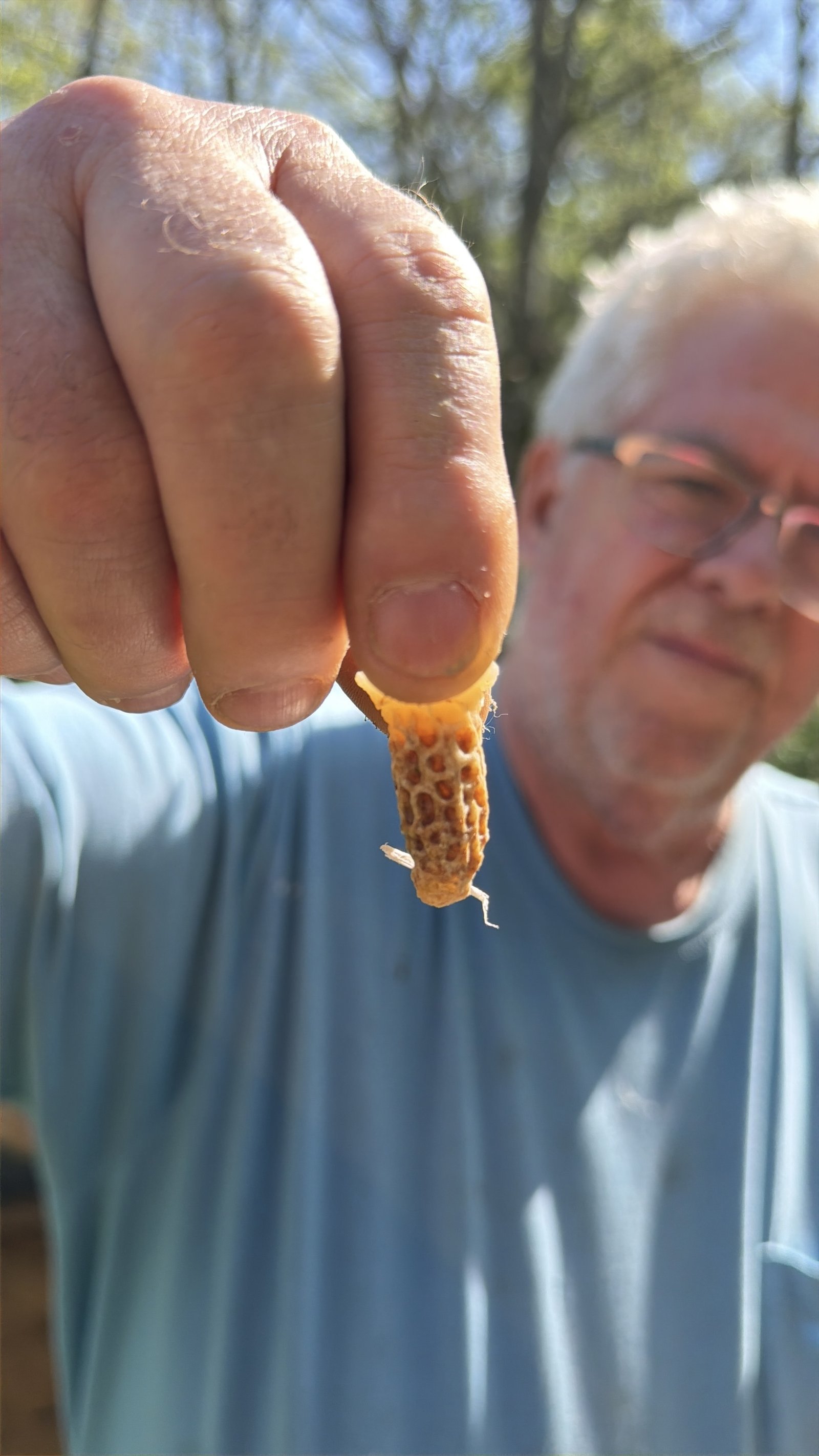
From there the queens emerge in their new homes, take their orientation flights, mate over a week or two, and start laying. We give them about three weeks of laying time before we evaluate brood pattern and decide which queens move into production hives, which become the next generation of breeders, and which we cull.
When a cycle goes sideways: this past week
Everything above describes a cycle that runs cleanly. Most of ours do. This past one did not, and the recovery is worth telling because it shows what the discipline of the method actually looks like in practice — not when everything goes right, but when it goes wrong and you have to keep your head.
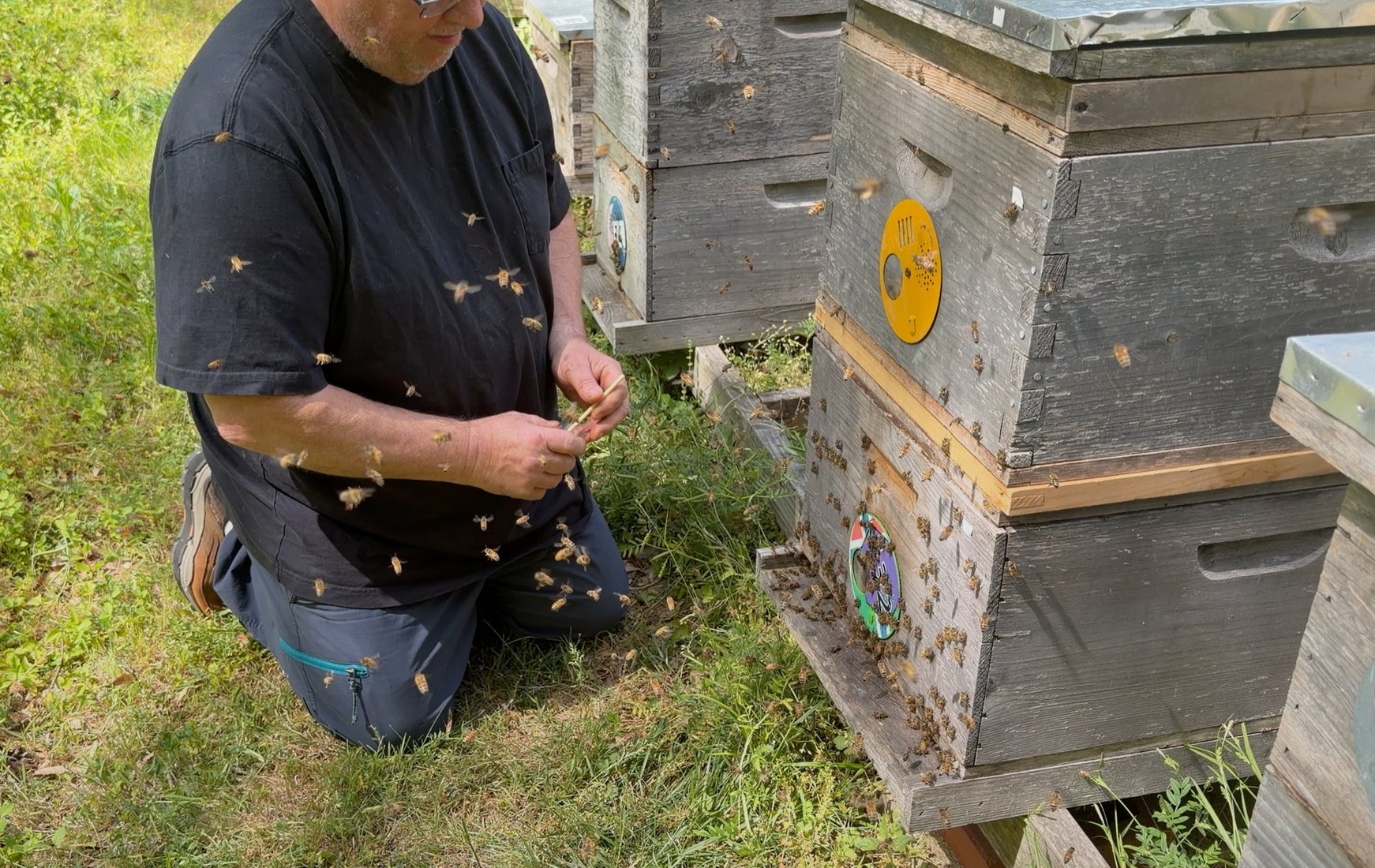
On grafting day — April 22, that’s the photo at the top of this post — the colony we were grafting from threw a swarm. The first sign was a roar at the entrance and the air around the hive going dark with bees. We caught the queen, returned her, and finished the graft. We thought we had recovered. Forty-eight hours later, when we did the cell check, only four cells had been accepted out of twenty-four. Acceptance rates in a healthy cell builder typically run far higher than that. Something had gone wrong.
We think we know what. A swarm doesn’t just take a queen with it — it takes a huge cohort of nurse bees, and nurse bees are exactly what feed grafted larvae royal jelly. Catching the queen was the easy part of the recovery. The nurse bee population we lost to that swarm could not be put back in the hive, and the cell builder simply did not have enough nurses to feed the larvae we’d given it. Four cells is not enough to justify a full distribution to our CCBA member partners, who were already preparing mating nucs for a delivery date a week earlier than we now expect.
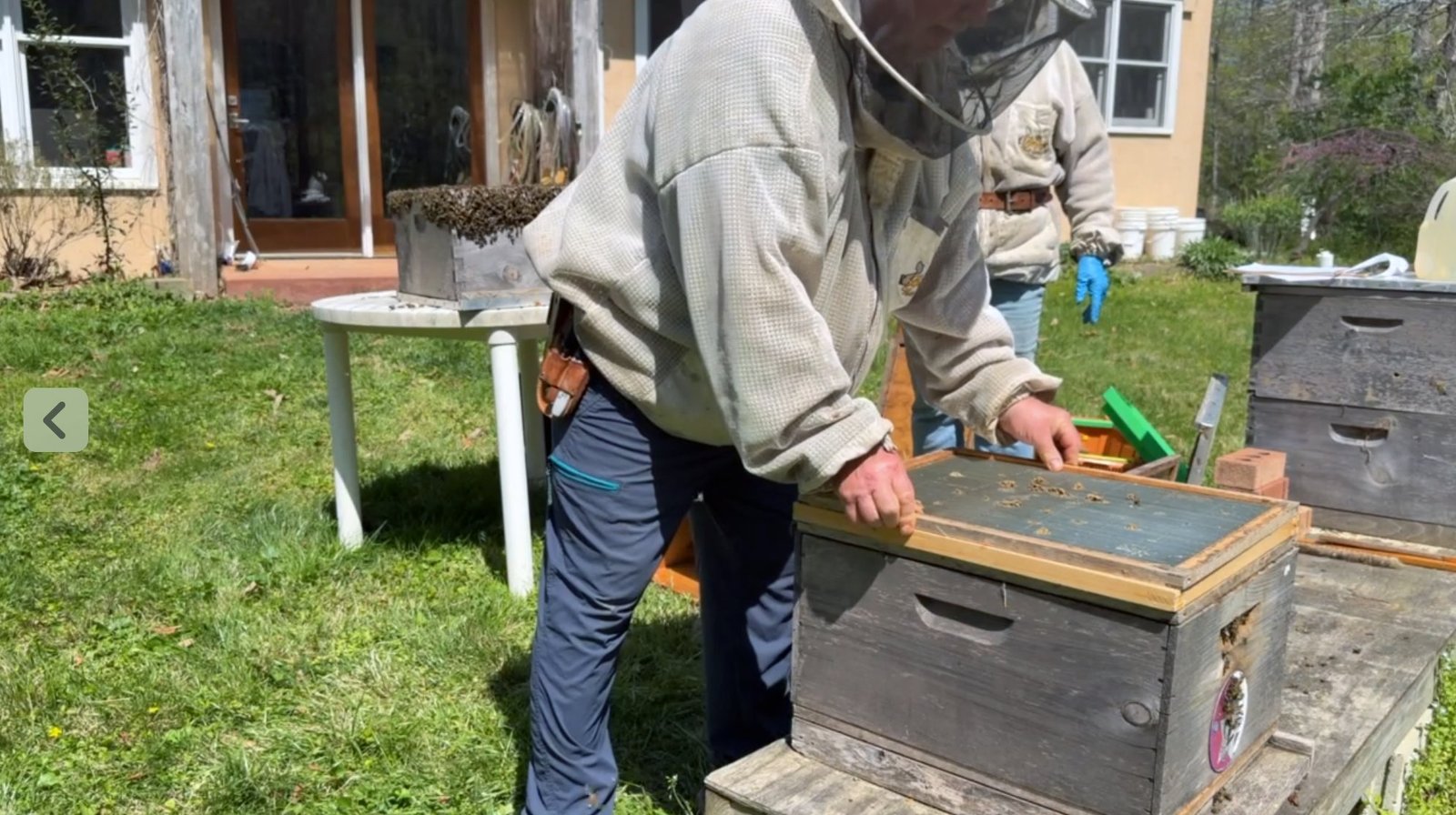
So we are resetting the cycle. As of today, Saturday, we have done a newspaper combine of two strong colonies into a single tall stack on the existing cell builder’s footprint. Five or six ProNuc transport boxes did the work of shuttling brood, frames, and bees from the donor colony into the new stack. The newspaper between the two boxes is doing what it has done in beekeeping for at least a hundred years: forcing two colonies to integrate slowly enough that they stop fighting and start working together. By Monday morning, the bees will have chewed through the paper, the populations will have merged, and we’ll be ready to reconfigure the stack into the full Cloake board geometry shown in the diagram above.
While we were at it, we did something we’ve come to think of as parallel-route insurance. Two of our colonies were queenless this week for unrelated reasons — both were ones we’d intended to deal with anyway. Instead of letting them raise queens from whatever larvae happened to be available, we destroyed their existing wild cells, donated frames of eggs and young brood from R 75 (the queen we’d planned to graft from), and now both of those colonies are quietly raising R 75 daughters of their own through emergency response. So we have three independent paths producing R 75-line queens this cycle: the formal graft on Tuesday, plus two parallel emergency responses in colonies that needed help anyway. Same genetics either way. Bonus queens if everything works.
The graft happens Tuesday. We’ll know in another forty-eight hours whether this round behaves the way we want it to. The point of writing this here, while we’re still in the middle of it, is to be honest about what queen rearing looks like at our scale. The method is sound. The bees are unpredictable. The cells we get this season will be the ones that survived all of that, and those are the queens worth selling.
Then we do it again
The day we distribute cells out is also the day we start the next batch. Wild-cell inspection on every frame, reconfigure the upper box, polish a new graft frame, prep entrances, fill the feeder. The cell builder runs in a continuous weekly rhythm for as long as the season supports it.
At Frosty Meadow we run the cell builder for about two or three cycles in the spring. Each cycle produces up to twenty-four cells — we do not graft more than that at a time, because each cell has to land in a fully prepared mating nuc and we only have so many of those. So a season at our scale yields somewhere around forty to fifty mated queens from this builder, on top of any queens we raise opportunistically from other splits and walk-aways.
That number won't impress a commercial queen breeder, but it is more than enough to support our nuc production, our breeding decisions, and the cells we contribute to the CCBA Queen Rearing Project. The point isn't volume. The point is that every queen comes from a mother we chose deliberately, has been raised with the care a hobbyist scale allows, and is locally adapted to the Piedmont before we ever sell or distribute her.
What this method gives us that others don't
We have tried other methods. Grafting into a permanently queenless starter-finisher colony works, but the colony slowly depletes itself and has to be rebuilt every few weeks. Walking-away splits give you queens, but you have no control over which larvae get chosen and the queens are often emergency-impulse cells of mediocre quality. Miller method is fine for small numbers but doesn't scale and gives you no control over timing.
The Cloake Board method, run carefully, gives us:
- Predictable timing. We know what day cells will be capped and what day they need to be distributed. We can plan mating nuc setup, member coordination for the CCBA project, and our own production schedule around it.
- Excellent cell quality. The two-stage swarm-then-emergency-then-just-swarm sequencing produces the largest, best-fed cells we have raised.
- A stable cell builder colony. The colony itself is not destroyed by the process. The queen continues laying in the lower box, the colony continues to function, and we can run multiple grafts through the same builder over the course of a spring.
- Scale appropriate to a hobbyist operation. We are not commercial breeders and do not pretend to be. This method gives us as many cells as we can responsibly handle, no more.
If you want to try this yourself
The Cloake Board method works, and it scales down. If you have one strong colony and the patience to set it up correctly the first time, you can raise your own queens this way. The two pieces of equipment you need are a Cloake Board (around forty dollars from most beekeeping suppliers, or you can build one) and a graft frame fitted with wax cups. Everything else is standard equipment you already have.
If you would rather have us raise the queens, we have Caucasian and Chatham County Local queens available each spring. And if you are a Chatham County Beekeepers Association member interested in receiving cells from this builder for your own queen rearing, the CCBA Queen Rearing Project page describes how that works.
Reserve a queen or nuc for 2026
If reading this made you want bees from us, our nuc reservations and queen line descriptions are the next stop.
See our nucsFurther reading
On the method itself
- University of Guelph Honey Bee Research Centre — Queen Rearing and Bee Breeding video series — Paul Kelly's own teaching videos. The grafting and cell building installments are the foundation of how we run our cell builder. If you only watch one beekeeper online, watch Paul.
- Paul Kelly profile — University of Guelph — background on his decades at the HBRC and the breadth of his contributions to Ontario beekeeping.
- Harry Cloake's original 1970s development of the underlying mechanism — the New Zealand technique that Paul Kelly's protocol builds on.
- Our Caucasian queens post for the broader picture of where this fits into our overall queen-rearing program.
On Frosty Meadow's queen rearing program
- Our queens page — what we offer, when, and our pricing.
- CCBA Queen Rearing Project — how we share cells from this builder with members of the Chatham County Beekeepers Association.